A historic moment in music business: four acts walk away from Ed Sheeran’s Loop Tour after Macklemore’s removal, challenging the pressure placed on artists speaking for Palestine.
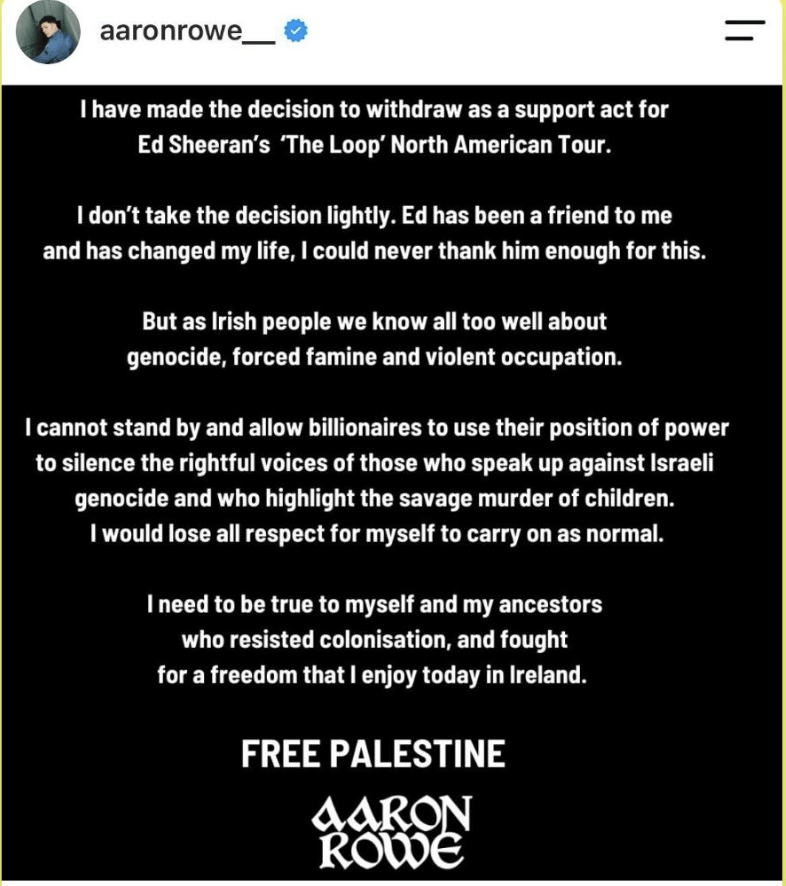
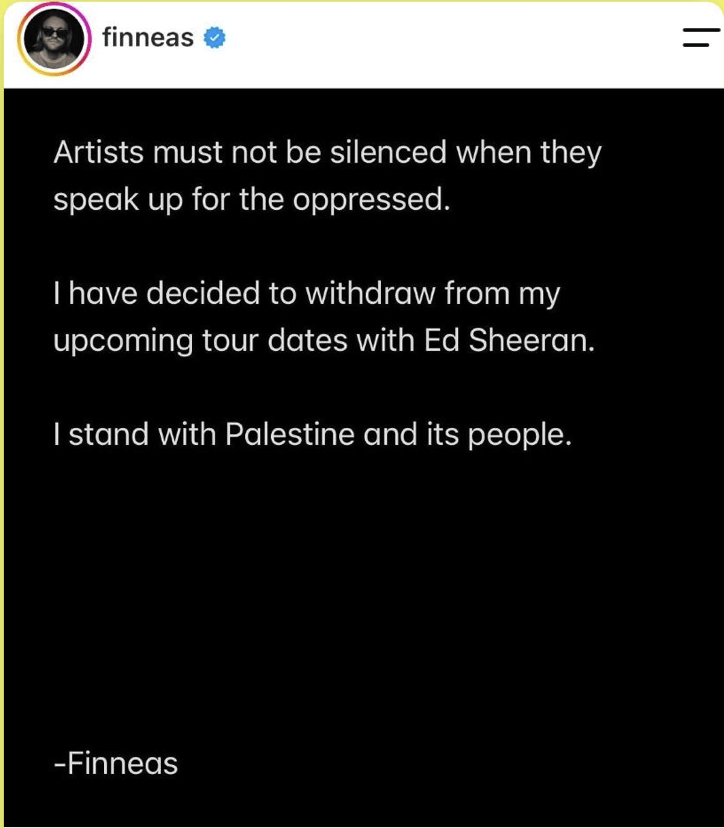
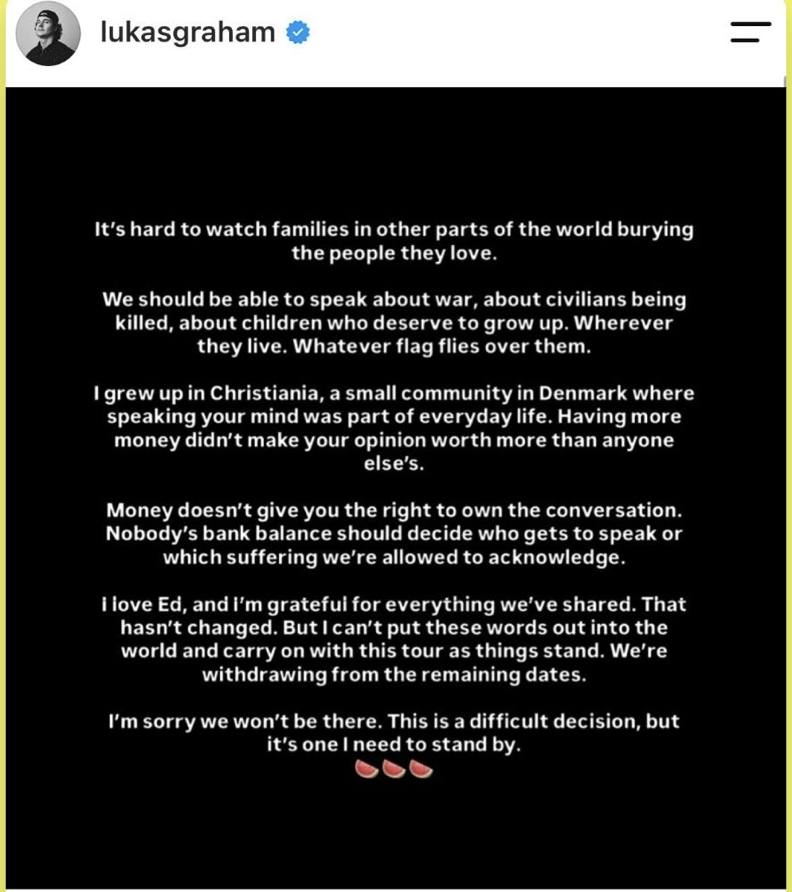
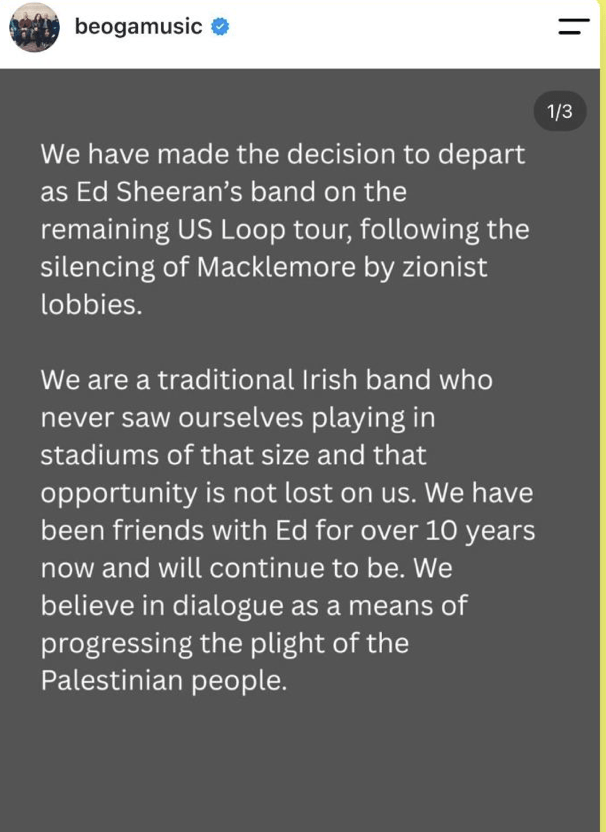
Since the Columbia University student encampment in 2024, he has become the most visible musicians speaking publicly about Palestinian rights and the war in Gaza. His song Hind’s Hall, released in the aftermath of the Columbia protests, became closely associated with the student movement and circulated internationally as a protest song against Israel’s genocide in Gaza.
The song was significant not simply because a major artist spoke about Palestine, but because Macklemore used his platform to connect the music industry with a protest movement that has changed the view of many on the colonial apartheid regime of Israel in Palestine.
More than two years later, that history has become part of the controversy surrounding his removal from Ed Sheeran’s Loop Tour.
After Macklemore spoke about Gaza and the occupied West Bank during his September 4 performance at MetLife Stadium and said “Free Palestine,” the Israeli-American Council called for his removal. Venues also objected to his participation, and Sheeran said the promoter ultimately told him that shows were at risk if Macklemore remained on the lineup.
At the center of the dispute is Robert Kraft, the billionaire owner of the New England Patriots and Gillette Stadium. Macklemore said Kraft told Sheeran that he would not be allowed to perform at Gillette and then contacted other stadium owners hosting the tour, creating pressure to remove him from the remaining dates. Kraft confirmed that Macklemore was barred from Gillette, while the tour promoter acknowledged that multiple venues would not host shows with Macklemore on the lineup.
Sheeran has stressed that removing Macklemore was not his decision. He said the promoter and venues made clear that the shows were at risk if Macklemore remained and has described his position as an attempt to remain politically neutral.
The controversy has also raised questions about what neutrality means when powerful venues and promoters can determine whether an artist remains on a tour because of his political speech.
But the most unusual development came afterward.
Four acts connected to the tour — Finneas, Aaron Rowe, Lukas Graham and Beoga, Sheeran’s own touring band — withdrew. Their statements differed, but they shared an objection to continuing with the tour after Macklemore’s removal.
Their decision also brought a normally private part of the concert business into public view. Disputes over political speech and venue access often unfold through conversations between artists, promoters, managers and venue owners, with the public seeing only the eventual lineup change. In this case, Macklemore spoke publicly about the pressure he faced, Kraft confirmed his decision at Gillette, the promoter acknowledged objections from multiple venues, and other artists then publicly chose to leave the tour.
That sequence makes the episode unusual. The issue is no longer simply whether an individual artist is willing to speak publicly about Palestine. Other artists have now demonstrated that they are willing to accept professional consequences for standing alongside someone who does.
That distinction matters.
Macklemore’s Hind’s Hall made him a prominent musical voice for Palestine. The response from the other tour acts introduced a different form of solidarity: not simply speaking on the issue, but withdrawing from a major commercial opportunity after another artist was removed over his political speech.
One artist was removed from the lineup. Four others chose to leave it.
That is why the episode may come to represent something larger than a dispute over one tour. It offers a rare public glimpse into how political pressure can operate within the music industry — and what can happen when other artists decide not to let that process remain invisible.
This is what solidarity looks like.
Let’s take all note.