There is still great concern over the condition of Alessandro Di Battista, who was admitted to a hospital in Cuba after suffering a serious medical emergency. The former Five Star Movement MP, who was on the island to produce a report for Il Fatto Quotidiano, experienced very severe headaches before losing consciousness.
The latest news, however, leaves room for hope: Di Battista has regained consciousness, has spoken with doctors and has been transferred to a hospital facility in Havana, where he will be able to undergo further examinations and receive the necessary treatment. His condition nevertheless remains serious.
Meanwhile, it is still necessary to determine whether it will be possible to transfer him to Italy. The Italian Foreign Ministry, through the Italian Embassy in Cuba, is closely monitoring the situation and has reportedly made a medical aircraft available to enable Di Battista to return to Italy. The transfer will only be possible if doctors determine that his clinical condition allows it and that the journey would not pose a risk to his health.
In these hours, numerous messages have arrived from Italy. Foreign Minister Antonio Tajani said that he has been in contact with the Embassy and that he is praying for Di Battista’s health. Messages of support have come from politicians across the political spectrum, from Giuseppe Conte to Elly Schlein, from Guido Crosetto to Antonio Tajani, as well as from Anna Maria Bernini, Nicola Fratoianni, Angelo Bonelli, Luigi Di Maio and many other political figures.
A particularly moving message came from Vittoria Baldino, who recalled Di Battista as her “beacon in the darkness” and urged him to “keep fighting,” stressing that the world still needs his voice and his courage.
Peter Gomez, editor of Il Fatto Quotidiano, also confirmed the seriousness of the situation, explaining that Di Battista was in Cuba specifically to work on new reports, as he has done in various parts of the world.
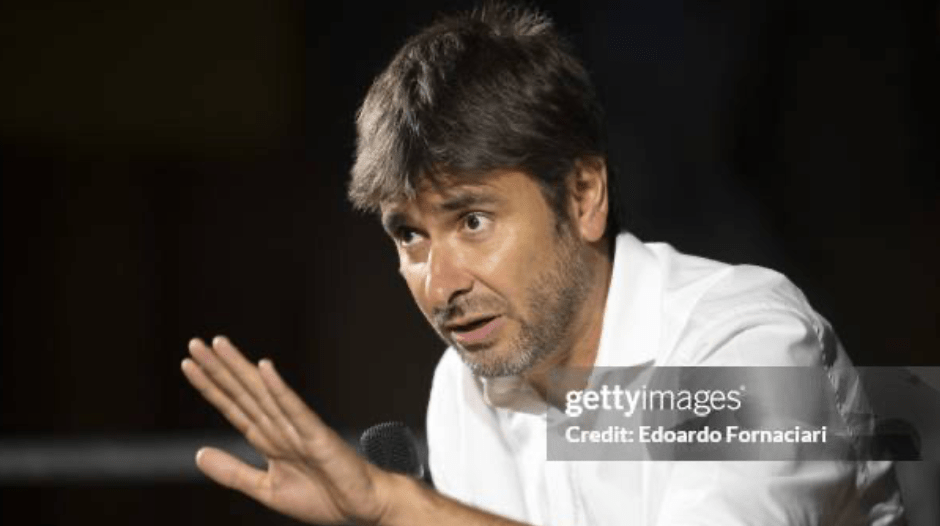
His positions on Gaza, Israel and the United States
Since the beginning of the genocide in Gaza, Di Battista has been one of the strongest and most outspoken dissenting voices in Italy. He has denounced the genocide of the Palestinian population, strongly criticized the Israeli government and challenged the political and military support provided to Israel by the United States and Western governments.
He has also expressed strongly critical views of Zionism, openly addressing issues that have often remained on the margins of Italy’s political and media debate.
In his televised discussion with Edward Luttwak, broadcast by La7, Di Battista directly addressed the relationship between Hamas, Israel and Zionism. The title associated with the interview read: “The problem is not Hamas, but Zionism, which denies the Palestinian Holocaust.”
Precisely because of the forcefulness of his positions regarding Israel, Zionism and U.S. foreign policy, many people are now expressing an even deeper fear: that his life could be at risk precisely because of his positions and his activities of denunciation.
At present, however, there is no evidence linking the medical emergency to his political positions, and any hypothesis in this regard remains speculation.