Second day of screening at the New York Film Festival — and sold out again
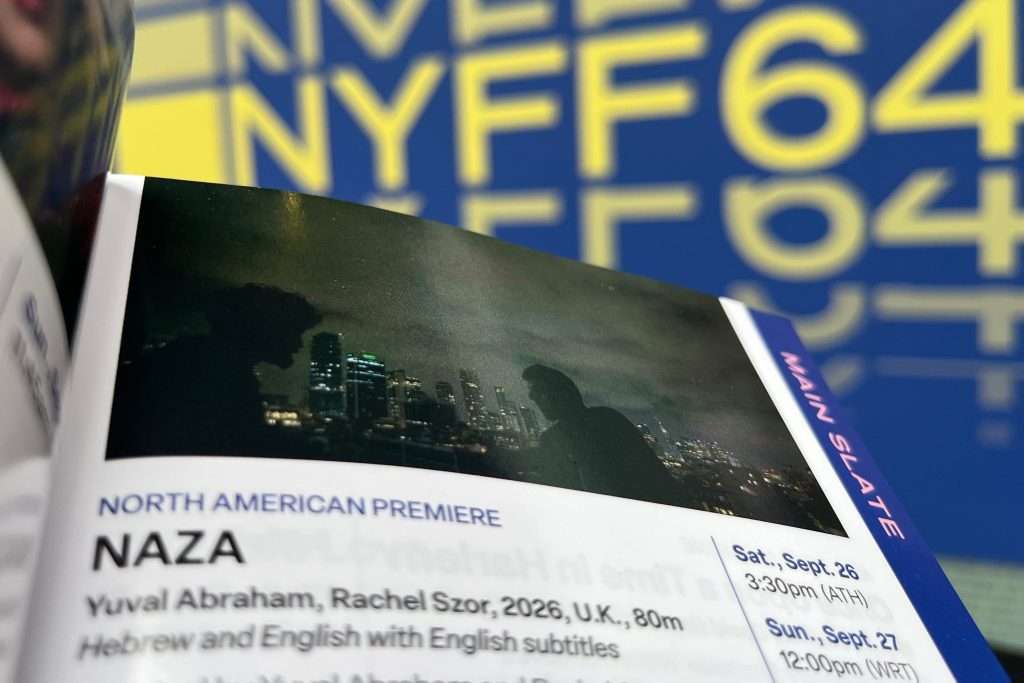
New York — Lincoln Center. Outside, rain is pouring down. The city is being battered by the rain and winds of the Nor’easter, but the storm does not stop the audience from showing up. It is the second day of NAZA screenings at the New York Film Festival, and it is sold out again: all 268 seats at the Walter Reade Theater have been taken. The film starts at noon, and those who were unable to get tickets still line up, hoping for a last-minute seat: around fifty people are waiting.
I wait outside the theater for the audience to come out and ask how the screening went, even without recording the interview on video. But there is little desire to talk.
The filmmakers’ intention in bringing NAZA to American audiences was explicit: “Americans need to know where their tax money goes,” they said. The film addresses that question through the testimonies of Israeli soldiers and intelligence personnel, who describe from the inside the surveillance systems, the selection of targets and the attacks on the Palestinian population.
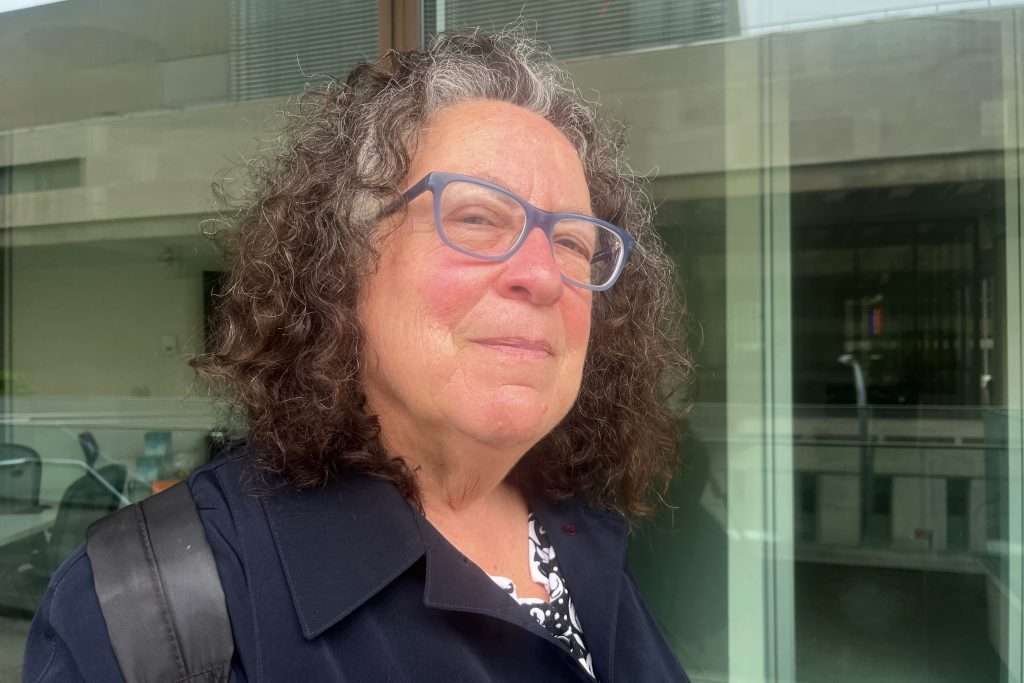
Outside, many people have tearful eyes, stunned expressions and little desire to speak. Only Rose, pictured here, agrees to stop. She is 71, a New Yorker and a retired college professor. She lived in Ramallah and taught in Bard College’s program for Palestinians in the West Bank.
She is the one who tells me what happened inside the theater when the lights came back on.
“The state of shock was palpable. There was no applause. Nobody said a word. In that suspended atmosphere, people slowly began making their way toward the exit. All you could hear was the rustling of bodies moving.”
«All this time, Palestinian voices have been ignored. NAZA can have an impact precisely because Israelis are the ones speaking.”
“I’ve followed the situation in the Middle East for decades, from before October 7, which is a kind of watershed moment for Israelis, but for Palestinians it has been going on for a very, very long time. I have followed the developments of this war with great interest because it follows the same pattern of Israeli victimhood: we have to defend ourselves… blah, blah, blah… and then there is the sophistication of surveillance and attacks on civilians, the use of the telephone or the pager.”
It is precisely the technology of surveillance that strikes her most.
“Then there was the pager attack in Lebanon. This level of sophistication and aggressive intervention in people’s private lives is something unknown on this scale. So it is a new level.”
Rose also connects what she saw in the film to the United States.
“It seems that the American military, the police and the government are really interested in this level of control and surveillance of the population. I mean, we are not being massacred, but it is a very similar technology.”
She then returns to what she believes the film makes visible: the distance between Palestinian testimony and what reaches American audiences through the mainstream media.
“All this time, Palestinian voices have been ignored.” And human rights, the International Criminal Court — nobody believes it. Nobody wants to believe it. And nobody wants to listen to any voices except those of the mainstream press.”
For Rose, NAZA can have an impact precisely because Israelis are the ones speaking.
“It is not new information. It is simply packaged in a different way, by very sensitive, articulate and politically rigorous filmmakers. It is a good film.”
And she adds:
“It is a film about spying. Israelis spying on Palestinians while we watch them.”